Rainy AI-Video Prompts: Decide What The Water Changes
An original planning exercise separates rain on a surface from spray arriving during a shot. It is a brief-writing check, not a tested generation recipe
A rainy AI-video scene needs more than a weather label. Before writing a longer prompt, a filmmaker can decide which surface the water affects and when the view changes.
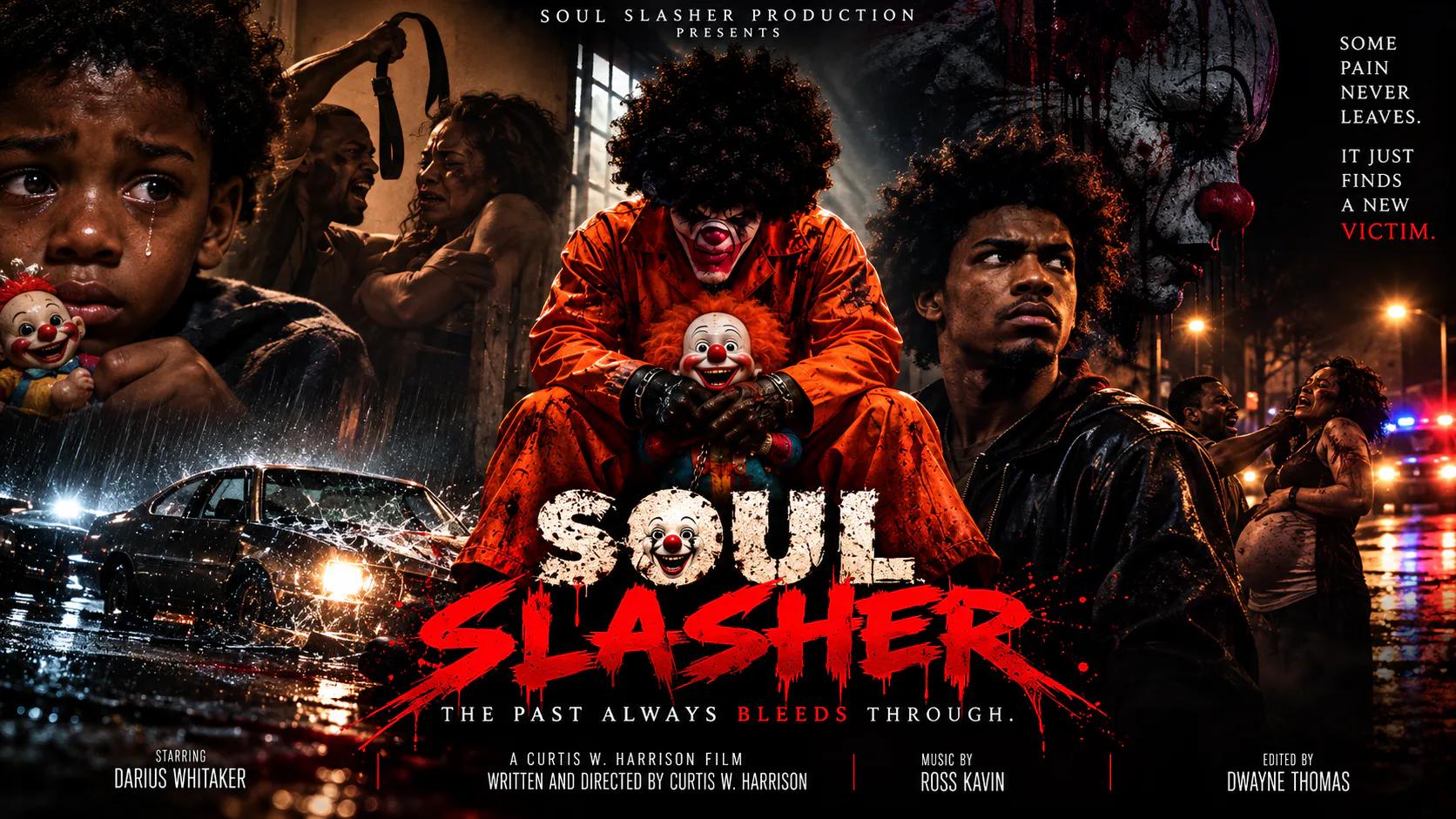
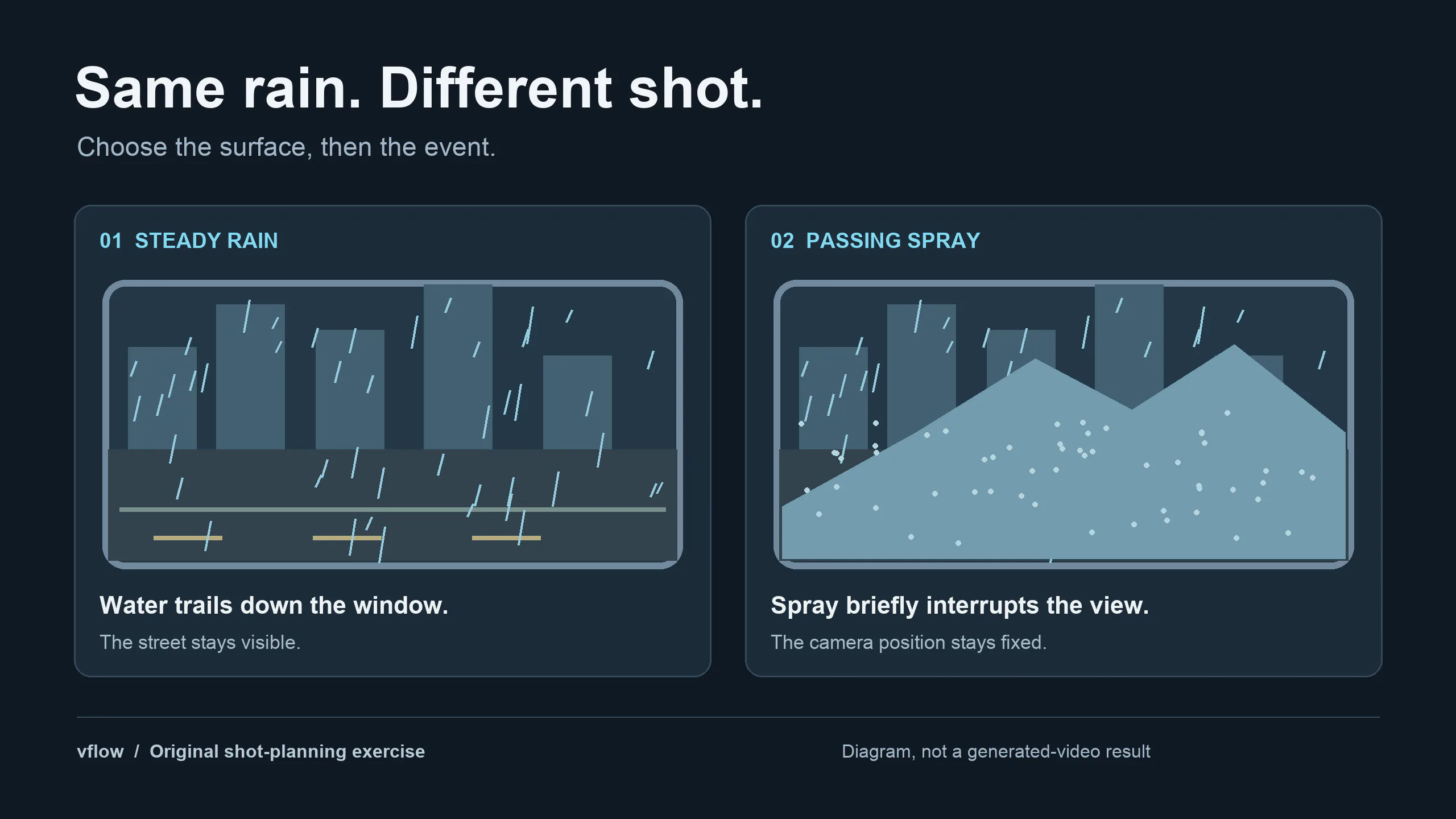
Consider two versions of a parked-car shot. In the first, the camera stays inside the car while water trails down a side window. The street remains visible beyond the glass. In the second, a passing vehicle throws spray across that window, briefly interrupting the view. Both scenes contain rain, but the second adds a separate event.
A short planning exercise makes the difference explicit. Write one sentence naming the surface: window, pavement or camera lens. Write another naming the event that changes it. Then state what should remain unchanged, such as the camera position or the car's location. These are original planning examples, not tested generation results.
The next check happens on paper. Does the spray require a passing vehicle that the brief never mentions? Is the camera inside the car while the instructions also ask droplets to strike its lens? Either choice can be intentional, but the writer should decide where the camera is and which layer of the image the water affects.
A useful revision changes one of those decisions before adding more mood adjectives. That creates a clearer brief to test; it does not establish that a model will follow it or simulate water accurately.
Disclosure: This article was prepared by the maintainer of vflow, a free, no-account AI-video reference library. The library pairs previews with source text and creator links. Source text may be a prompt, brief or excerpt; the library does not generate videos or promise reproducible results.
Websites & Related Links
Companies & Organizations
Contributor’s AI-Video Reference Library